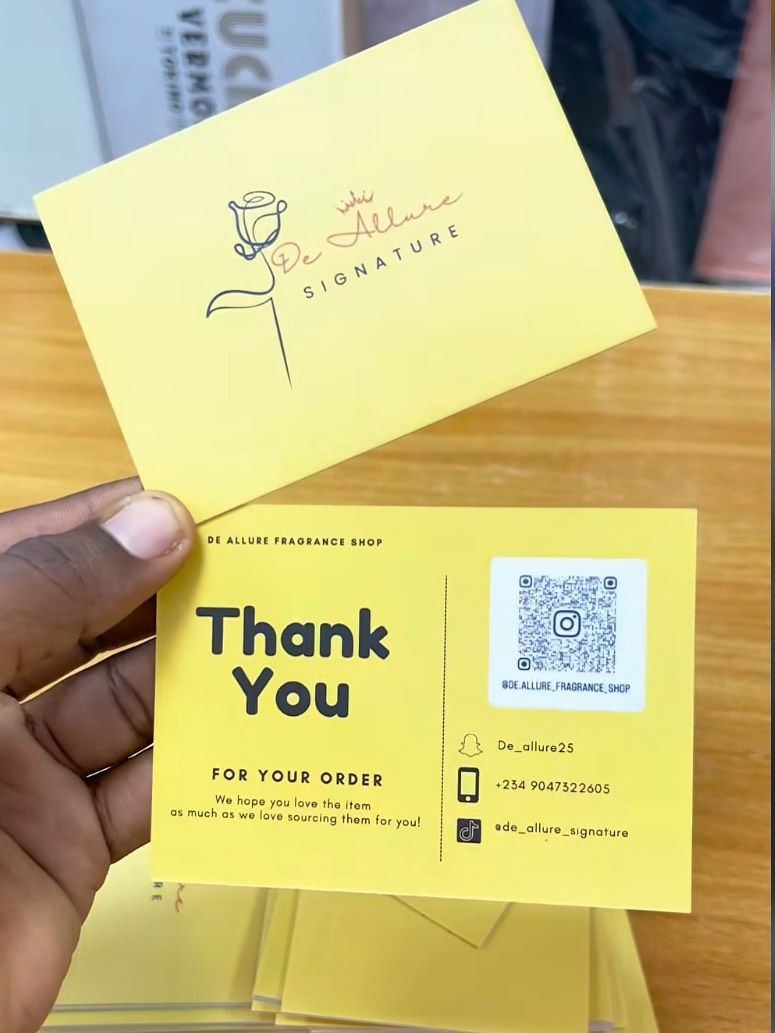
A business card is the only marketing material your customer physically holds. Everything about how it feels — weight, texture, whether it bends — registers before they read a word. Here is how to make those choices deliberately.
GSM: what the number actually means
GSM stands for grams per square metre. It measures paper weight, which in practice means thickness and stiffness.
| Weight | How it feels | Verdict |
|---|---|---|
| 250gsm | Thin. Bends easily in a pocket. | Avoid for business cards |
| 300gsm | Acceptable. The common budget option. | Workable minimum |
| 350gsm | Firm, substantial, holds its shape. | The standard we recommend |
| 400gsm+ | Notably thick. Makes a statement. | Premium, higher cost |
The jump from 300 to 350gsm costs very little and is the most noticeable single upgrade you can make. Someone handed a 350gsm card and a 300gsm card will feel the difference without being able to say why.
A useful test: hold the card by one corner between finger and thumb. If it droops noticeably under its own weight, the stock is too light.
Matte versus gloss
Matte
No shine, slightly textured, soft to the touch. Photographs and colours look restrained rather than vivid. Reads as considered and professional. Crucially, you can write on it — which matters more than people expect, because a card someone has scribbled a note on tends to get kept.
Best for: consultants, legal and financial services, architects, anyone whose value is expertise.
Gloss
Reflective, smooth, colours appear more saturated and images sharper. Fingerprints show. You cannot reliably write on it with a biro.
Best for: photographers, event businesses, food, fashion — anywhere the visual is the product.
Silk
Between the two. A slight sheen without the mirror finish. A safe choice when you cannot decide, and it handles both text and images well.
Lamination: is it worth it?
Lamination is a thin plastic film applied over the printed card. It adds cost and usually a day to turnaround. It is worth it more often than not, for three reasons:
- Durability. An unlaminated card in a wallet looks tired within weeks. A laminated one survives.
- Feel. Soft-touch matte lamination in particular gives a distinctive velvety texture that people notice immediately.
- Colour protection. Dark colours in particular scuff and show wear without it.
When to skip it: very short-term cards, or when budget is genuinely tight and you would rather put the money into higher gsm. Between 300gsm laminated and 350gsm unlaminated, we would take the 350gsm.
Special finishes
- Spot UV. A glossy varnish applied to specific areas only — typically the logo — over a matte card. The contrast is striking and it photographs well. Adds meaningful cost.
- Foil. Metallic gold, silver or colour pressed into the card. Genuinely premium, genuinely expensive.
- Embossing. Raised areas you can feel. Works best with simple, bold shapes.
- Rounded corners. Small cost, distinctive silhouette, and corners are what damage first on a square card.
Standard sizing in Nigeria
The standard business card size used in Nigeria is 85 × 54mm. Stick to it unless you have a strong reason not to. Non-standard sizes do stand out, but they also do not fit card holders, wallets or Rolodexes — and a card that will not fit anywhere gets thrown away.
Preparing your artwork
- 300dpi resolution minimum
- CMYK colour, not RGB
- 3mm bleed on all sides
- Keep text at least 4mm inside the trim edge
- Supply as print-ready PDF where possible
Getting these right saves you both money and a day of back and forth. See our printing cost guide for why artwork preparation affects the final bill.
Our recommendation, if you want one answer
350gsm, matte lamination, standard 85 × 54mm, double-sided. It suits nearly every industry, costs sensibly, survives real-world handling, and you can write on the back. Add spot UV on the logo if you want something more distinctive.
Common questions
What gsm is best for business cards?
350gsm is the standard recommendation. It feels substantial without being unusually thick, and the cost difference from 300gsm is small relative to the improvement in feel.
Should I choose matte or gloss business cards?
Matte for professional services and anywhere people may write on the card. Gloss where images and colour vividness matter, such as photography or food. Silk sits between the two.
Is lamination necessary on business cards?
Not strictly, but it significantly extends how long a card looks new in a wallet, and soft-touch matte lamination adds a texture people notice. It is usually worth the modest extra cost.
What size are business cards in Nigeria?
The standard is 85 by 54mm. Non-standard sizes stand out but do not fit standard card holders and wallets, which shortens how long they are kept.
Need a quote for your job?
Send us the details and we’ll come back with a firm price, no obligation.
WhatsApp Us Request a Quote